NEWS
Sustainable Superstar: Westport Farmers’ Market Is UnPlastic-ing the Way We Shop
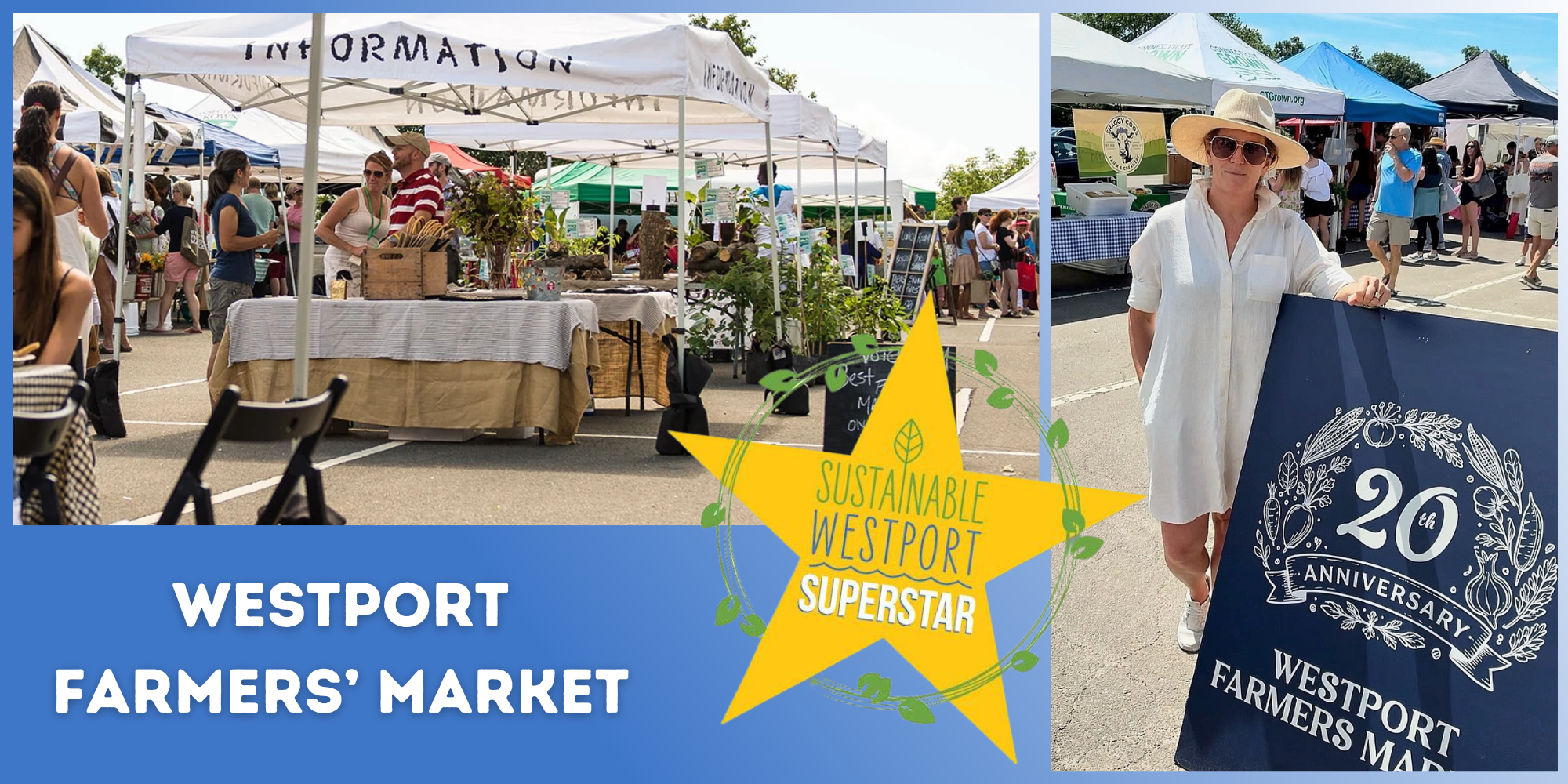
This September, as Sustainable Westport focuses on UnPlastic Your Groceries, we’re celebrating a community institution that has been rethinking plastic and packaging for years: the Westport Farmers’ Market.
Today, the Westport Farmers’ Market (WFM) is 98% plastic-free, with plastic limited primarily to applications required for consumer protection. That’s an impressive achievement for a market bringing together dozens of independent farmers, food producers, and vendors each week—and an example of what can happen when an entire community commits to doing things differently.
For WFM Executive Director Lori Cochran-Dougall, that commitment is part of the responsibility farmers markets have to their communities.
“To me, farmers markets are the first line of education. When someone walks through the door of a farmers market, they naturally believe they are purchasing healthy food and doing something good for the environment. We, as an entry point for education, have a responsibility to do right by the environment.”
Making Less Plastic the Norm
Getting to 98% plastic-free didn’t happen overnight. WFM has steadily moved its vendors away from unnecessary plastic and toward more sustainable alternatives—and vendors have embraced the effort.
Interestingly, one of the lessons has been that reducing plastic doesn’t necessarily mean increasing costs.
“Beyond it being the right thing to do, one reason we moved away from plastic was waste management,” Cochran-Dougall explains. “Plastic is bulky and cumbersome.”
WFM vendors have also worked together on larger-volume purchases of alternative packaging to help bring down costs. And, Cochran-Dougall says, many have discovered something that challenges a common assumption: being more environmentally conscious can also make good business sense.
That’s exactly the kind of change UnPlastic Westport hopes to encourage. Sustainability becomes much more powerful when we move beyond asking individuals to make a different choice and instead create systems that make better choices easier and more accessible.
A Different Kind of Grocery Trip
Shopping at a farmers market also offers something that can be surprisingly difficult to find in a conventional grocery store: food without layers of packaging, which is not only great for the environment but also good for our health.
Produce can often go directly from a farmer’s stand into your reusable bag or basket. Prepared-food vendors are encouraged to minimize unnecessary packaging. And shoppers have the opportunity to talk directly with the people who grow and produce their food.
Cochran-Dougall says shoppers themselves are increasingly part of that change.
“We see shoppers bringing their own glass items to the market. There are more conscientious shoppers each year,” she says.
There’s still plenty of room for improvement (including the stream of single-use coffee cups shoppers carry into the Market from elsewhere) but she sees reason for optimism.
“I’m optimistic that we are making headway step-by-step. More and more people care, and that is success.”
The Next Challenge: Takeout
If Cochran-Dougall could challenge Westport to rethink one plastic habit, however, she wouldn’t stop at the grocery cart.
She’d tackle restaurant takeout packaging.
Westport is home to exceptional restaurants and chefs, she notes, yet too much of the food we take home still comes packaged in disposable plastic, despite Westport having a single-use plastics ordinance. She’d like to see both restaurants and customers push harder for alternatives.
“I would love to be as talented as the chefs,” she says, “and I can never imagine putting those amazing dishes they create into something so not worthy of their food.”
It’s a fitting challenge—and one that extends the idea behind UnPlastic Your Groceries beyond the Westport Farmers’ Market. Whether we’re buying vegetables, grabbing coffee, picking up dinner, or packing lunches, each trip presents opportunities to notice how much disposable plastic has become part of our routine—and where we might be able to do things differently. As a side note, Sustainable Westport’s Restaurant Champions program celebrates local restaurants who are implementing sustainable food business guidelines, including compliance with Westport’s single-use plastics ordinance. Cochran-Dougall encourages restaurant patrons to look for restaurants with the Sustainable Westport Restaurant Champions logo and support them.
98% Plastic-Free—and Still Pushing
Perhaps that’s what makes the Westport Farmers’ Market such a fitting Sustainable Westport Superstar. Reaching 98% plastic-free is worth celebrating, but WFM isn’t treating it as the finish line.
“Overall, we are getting there, and we will continue to push the envelope,” Cochran-Dougall says. “Other countries and areas within our country are making strong strides, and I think we will be fast to follow.”
This September, we’re asking Westport residents to UnPlastic Your Groceries by paying a little more attention to what comes home with the food we buy. Bring reusable bags. Skip unnecessary plastic produce bags. Choose loose fruits and vegetables when possible. Look for products packaged in glass, paper, aluminum, or cardboard. Bring reusable containers where permitted. And support businesses that are working to reduce their reliance on single-use plastic.
Or simply spend a Thursday at the Westport Farmers’ Market, where you can see what shopping with a lot less plastic already looks like.