Container, 1 column
1 column
1/2 column
1/2 column
1/3 column
1/3 column
1/3 column
1/3 column
2/3 column
1/4 column
1/4 column
1/4 column
1/4 column
1/4 column
3/4 column
1/5 column
1/5 column
1/5 column
1/5 column
1/5 column
1/5 column
4/5 column
1/6 column
1/6 column
1/6 column
1/6 column
1/6 column
1/6 column
1/6 column
5/6 column
Sustainable Westport Superstar: Sienna Schwartz, Speckless
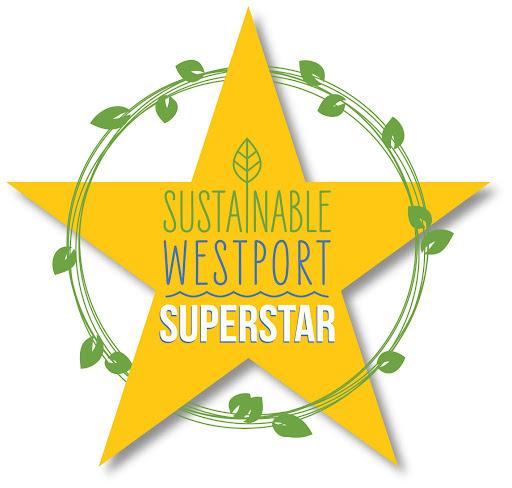
Meet Sienna Schwartz
Sienna Schwartz, a rising junior at Staples High School, is not your average teen. She’s a microplastics crusader with a mission to protect our health, soils, water, and oceans.
The Problem: Microplastics Are Everywhere
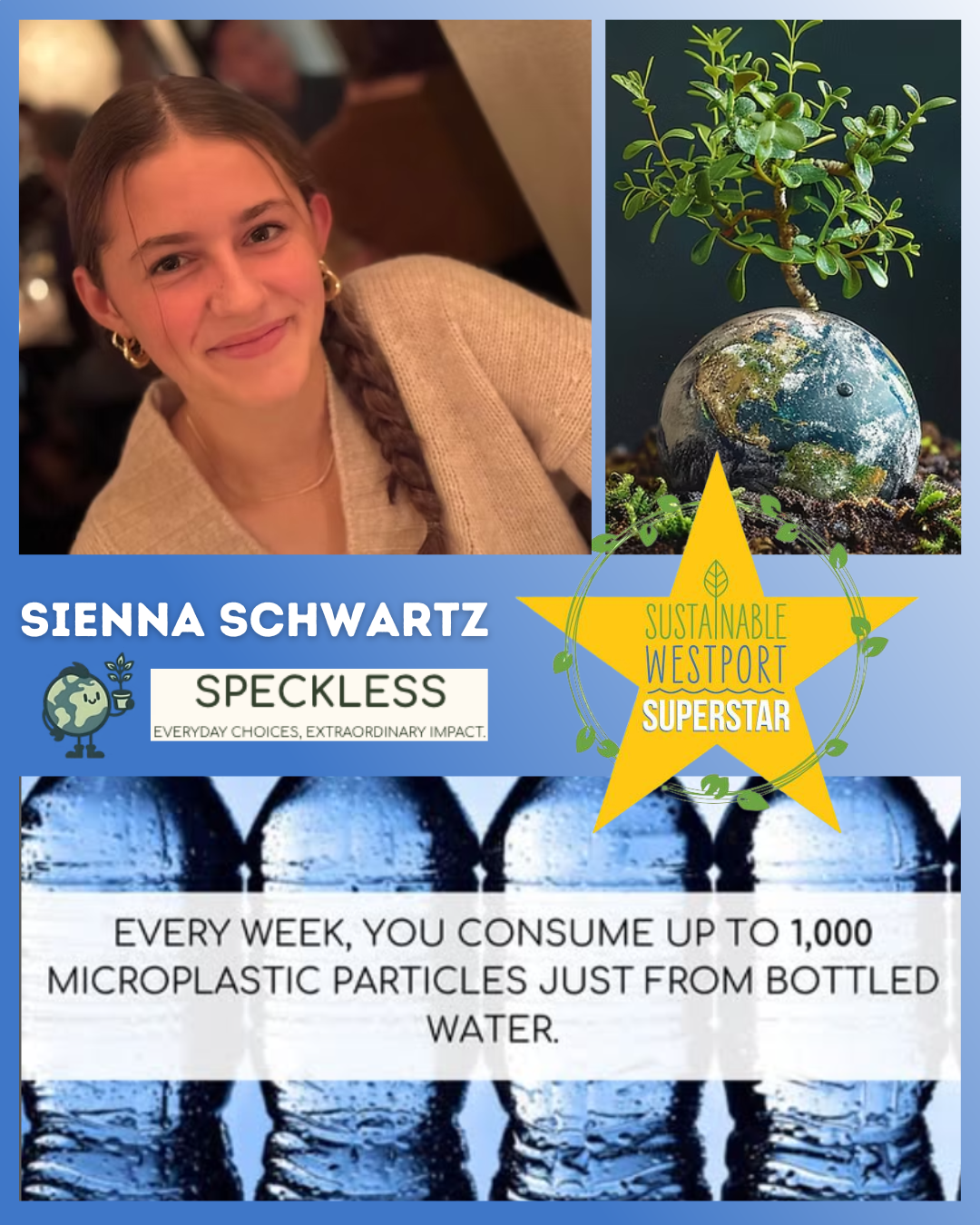
- The average American may consume up to 1,000 microplastic particles per week via bottled water, and 51 trillion tons pollute our oceans.
- These particles interfere with plant photosynthesis by up to 14%, threatening global food supplies and putting 400 million people at risk of starvation in the coming decades.
- Microplastics also end up in the air we breathe, our food, and even our bodies.
Sienna’s Response: Speckless
Frustrated that awareness wasn’t translating into action, Sienna created Speckless — a vibrant website and Instagram platform under the tagline: “Everyday Choices. Extraordinary Impact.” Through #MicroplasticMonday, she shares eye-opening stats; through #SustainableSwapFriday, she offers dozens of vetted, plastic-free alternatives — everything from ceramic bowls and cast-iron skillets to glass water bottles, natural-fiber apparel, shampoo bars, and more.
- She’s also developing meaningful science. After reviewing hours of research, Sienna is preparing a study on how microplastics affect C. elegans worms in different bacterial environments—her first step toward contributing real data to this global issue 06880.
How You Can Follow Her Lead
- Explore the Speckless site and Instagram page.
- Make small, high-impact swaps: e.g., reusable glass or steel bottles, natural-conditioner bars, ceramic cooking tools.
- Join the conversation: tag your own swaps with #MicroplasticMonday or #SustainableSwapFriday.
- Educate your circle — microplastics are invisible, but our choices don’t have to be.
Call to Action: Share this post, tag your microplastic-free swaps, and help spread Sienna’s message. Because together, we truly can help clean and protect our soil, our air, our water—and our future.
THANK YOU, Sienna Schwartz, for being a Sustainable Westport Superstar!

How to Reduce Your Connecticut Energy Bills & Build Energy Resilience
Electricity bills are rising, but there are concrete steps you can take to lower your costs and make your home more energy resilient. Our companion article explains the key factors behind Connecticut’s high electricity prices if you’d like to learn more. Below, we highlight key programs, rebates, and incentives you can tap into right now.
Connecticut Energy Resources — Key Deadlines & Opportunities
Home Energy Solutions (HES) Audits
As available through HeatSmart Westport, HES audits are a professional home energy audit that identifies savings opportunities and can include on-the-spot efficiency upgrades.- Ongoing: HES Income-Eligible (HES IE) remains free for low-income households. HES visits are state programs, so the upfront rebates are strong, however many energy upgrades will lose the 30% federal tax credit at the end of 2025.
- Programs available through United Illuminating and Eversource.
Residential & Commercial Solar Credits
Federal tax incentives to make residential and commercial solar installations more affordable.- Through December 31, 2025: The 30% federal tax credit for residential solar systems and energy storage is available. Systems must be installed and energized by this date to qualify.
- After December 31, 2025: Tax credit for residential solar is eliminated.
- Commercial solar: Credits will be reduced starting in 2026 and fully eliminated after December 31, 2027.
- Note: High demand means installation timelines are already longer — early action is strongly recommended.
Home Battery Storage Incentives
Rebates and tax incentives to install battery systems that store solar energy and provide backup power.- Through December 31, 2025: The 30% federal tax credit for storage is in effect.
- State rebates available now: Rebates for residential storage continue through Energy Storage Solutions, Eversource, and United Illuminating. Additional incentives are available for customers who allow utilities to draw from batteries during peak periods.
Electric Vehicle & Charger Incentives
Rebates and incentives for EV purchases, EV chargers, and charging during off-peak hours.-
- Federal EV purchase rebates: End on September 30, 2025.
- CT State EV Rebates (CHEAPR): Offers incentives to Connecticut residents who purchase or lease an eligible new or used battery electric (BEV) or plug-in hybrid electric (PHEV) vehicle from a licensed Connecticut automobile dealership or original equipment manufacturer.
- Effective August 1, 2025, the following incentive level changes are in effect:
- BEV Standard Rebate: reduced to $500 from $1,500
- PHEV Standard Rebate: reduced to $500 from $750
- FCEV Standard Rebate: reduced to $500 from $1,500
- Effective August 1, 2025, the following incentive level changes are in effect:
- Rebate+: Continue for low-income households beyond 2025.
-
-
- Rebate+ New BEV: $500 + $3,000 = $3,500
- Rebate+ New PHEV: $500 + $1,500 = $2,000
- Rebate+ New FCEV: $500 + $3,000 – $3,500
- Rebate+ Used incentives will remain unchanged.
-
- EV charger rebates (Eversource & United Illuminating): Available now, but after December 31, 2025, these will be limited to low-income households only.
- Time-of-Use charging programs: Expected to remain available beyond 2025.
- For ongoing updates, see the EV Club of CT.
Smart-E Loans (CT Green Bank)
Low-interest financing from CT Green Bank for a wide range of home energy improvements.- Available now with no set expiration (EnergizeCT): Covers HVAC, insulation, windows, solar, battery storage, EV chargers, appliances, and roof or tree work for solar.
- See Rewiring America’s page to double check federal tax credit eligibility.
Efficiency Rebates (EnergizeCT)
Cash rebates to offset the cost of efficiency upgrades for homes, businesses, and multifamily properties.- Available now with no set expiration: Rebates through EnergizeCT. Some upgrades require a Home Energy Solutions visit. Visit Sustainable Westport’s HeatSmart Westport to learn more.
Energy Assistance Programs (PACE)
Support programs designed to help households reduce bills and manage energy costs.- Available now: PACE compiles programs designed to assist households in need, though some offerings may be affected by federal policy changes.
- New in 2025: I Heart My Home transitioned to HomeEnergy ConneCT.
Commercial Property Assessed Clean Energy (CPACE)
Financing that enables commercial property owners to fund clean energy improvements and repay them over time.Ongoing: CPACE financing remains available, though specific business-focused programs may be reduced or eliminated under new federal legislation.

Why Connecticut Electricity Bills Are So High
Connecticut Electricity Prices Are Nearly Double the U.S. AverageConnecticut Electricity Prices Are Nearly Double the U.S. Average
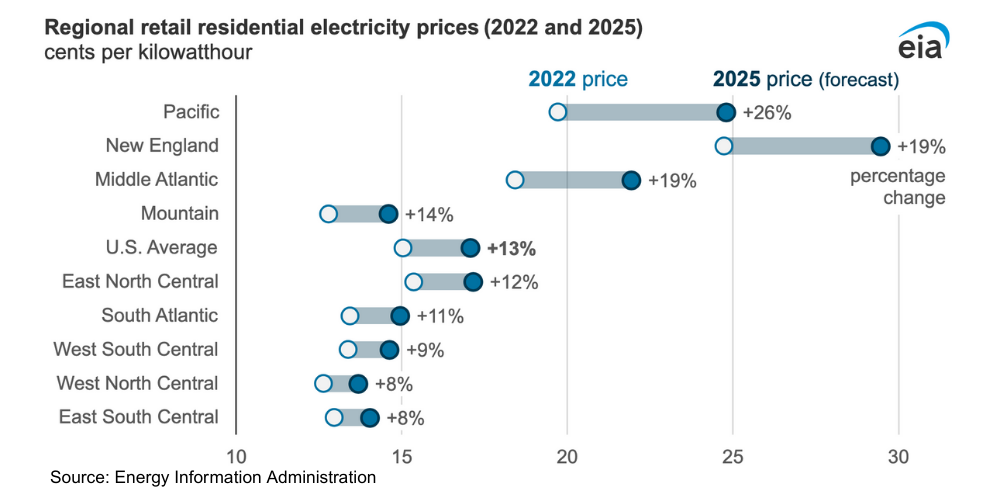
If your electricity bill has felt a little shocking lately, you’re not imagining things. Across the country, energy costs are rising faster than inflation — and here in Connecticut, we’re feeling it more than almost anywhere else. In fact, New England has the highest electricity prices of any U.S. region at around 30 cents per kilowatt-hour according to the Energy Information Administration (EIA). That means we’re paying nearly double what households in many other states do, and forecasts show rates climbing nearly 20% higher in 2025 compared to just a few years ago.
What’s Driving Higher Energy Costs?
Several factors combine to create a “perfect storm” for rising electricity costs:
- High Demand Outpacing Supply: Electricity use is climbing for the first time in a decade, driven by data centers, electric vehicles, and more homes relying on electric appliances and air conditioning.
- Aging Infrastructure: Connecticut’s power grid is old, and the cost of maintaining and upgrading equipment now consumes a larger share of bills than electricity generation itself.
- Climate Change and Extreme Heat: Rising temperatures increase air conditioning demand during heat waves. Scientific research shows that extreme heat events are becoming more frequent and intense in New England, directly contributing to higher electricity usage and peak demand. (NOAA Climate.gov)
- Over-Reliance on Natural Gas: Over half of Connecticut’s electricity comes from natural gas power plants. While cheaper than coal, gas prices fluctuate, and supply constraints during extreme weather can push costs higher. (ISO New England)
- Slow Deployment of Renewables and Transmission Upgrades: Clean energy like wind and solar helps lower costs but is intermittent. Delays in new transmission lines and backup systems increase reliance on conventional power, adding expense.
But why are Connecticut charges so high?*
You may have heard of the Public Benefits Charge (PBC). It’s a mandatory fee on Connecticut electric bills that funds programs like low-income assistance, renewable energy incentives, energy efficiency upgrades, and long-term power contracts – including payments to support Millstone nuclear plant – as well as costs for ISO-New England, which manages the regional grid.
The PBC is controversial because it makes up nearly 20% of many customers’ bills – far higher than in most states, where similar charges usually account for less than 5%. Critics say these programs should be funded through the state budget, not hidden in utility bills that disproportionately affect ratepayers. Supporters argue that the PBC guarantees stable, dedicated funding for critical programs that might otherwise face budget uncertainty. The debate continues over whether the charge should remain on bills or be restructured to balance transparency, affordability, and reliability.
Some Good News
]In August, Connecticut’s Public Utilities Regulatory Authority approved a $155 million relief package, funded through state borrowing, to help offset the high cost of electric bills.** The plan is expected to provide Eversource customers with an average savings of about $9 per month. A second round of borrowing is anticipated in 2026, with the associated savings expected to extend through 2027.
Transitioning to Clean Energy Sources
Natural gas currently powers about 58% of Connecticut’s electricity while nuclear powers about 38%, but transitioning to electric, renewable-powered systems is essential to reduce long-term costs, emissions, and vulnerability to climate-driven price spikes. The short-term reliance on gas highlights the need to expand solar, battery storage, and efficiency upgrades for greater energy resilience.
The combination of high demand, aging infrastructure, climate-driven heat, and gas price volatility suggests that electricity bills may continue to rise in Connecticut despite the aforementioned relief package.
Next Steps: Learn how Sustainable Westport and local programs can help you lower your energy bills and strengthen your home’s energy resilience in our recent article, How to Reduce Your Connecticut Energy Bills & Build Energy Resilience.
Footnotes:
* https://ctmirror.org/2025/05/19/ct-public-benefits-charge/
** The authorization to borrow money to provide relief to ratepayers came from Senate Bill 4, the omnibus energy savings legislation. An additional round of borrowing is expected next year.

Veggie Garden Overflowing? Donate it!
Too many cucumbers or tomatoes growing all at once in your garden? Thought the kids would eat the apples you bought? Don’t throw good food into the compost (or worse, the garbage)! Instead, drop edible produce and herbs off at one of the many produce drop-off sites in Westport this summer. Your food donation will be brought to a food distribution center in the area, and will provide sustenance to food-insecure CT residents. Fresh, whole food is greatly appreciated and scarce at most food pantries.
More food is incinerated than any other single material in our everyday trash, constituting 22% of discarded municipal solid waste. Let’s do our part to change that. And if you want to help further, consider volunteering with Food Rescue US to pick up food from a supermarket, restaurant or other food establishment (school, hospital, cafeteria, etc) and bring it to a food distribution center.

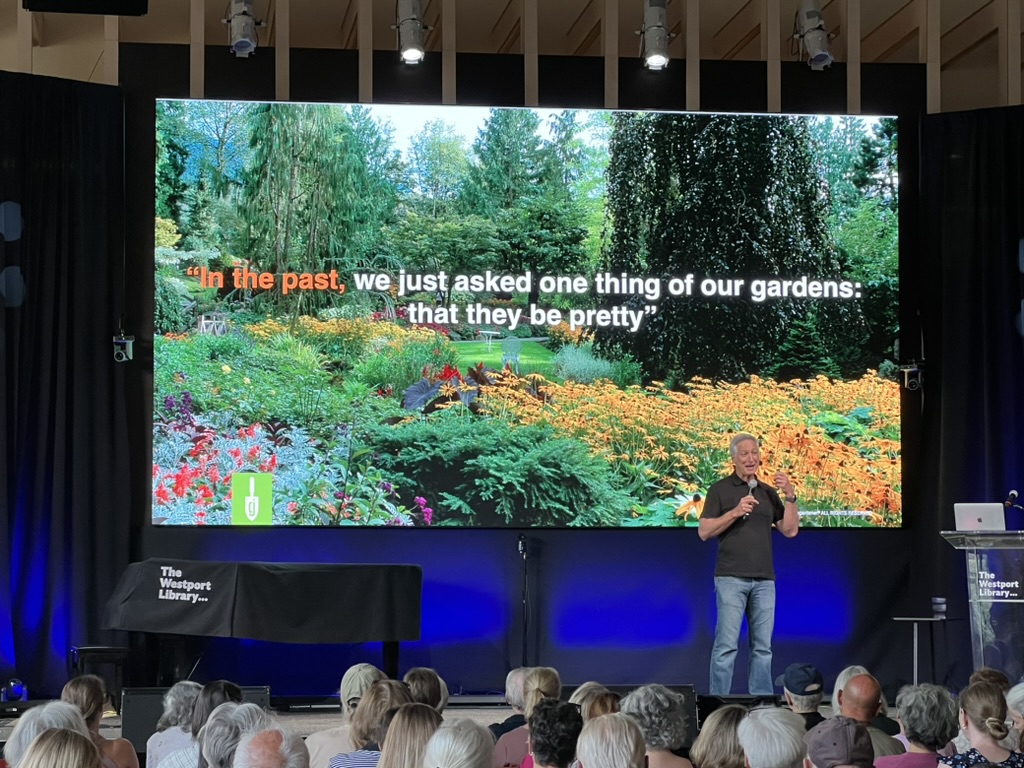
Digging Deeper with Joe Lamp’l: “Your Yard, Our Climate” Capstone Event – June 2025
What if your yard could do more than just look good? What if it could help reverse climate change, support struggling pollinators, and restore wildlife habitats — without sacrificing beauty?
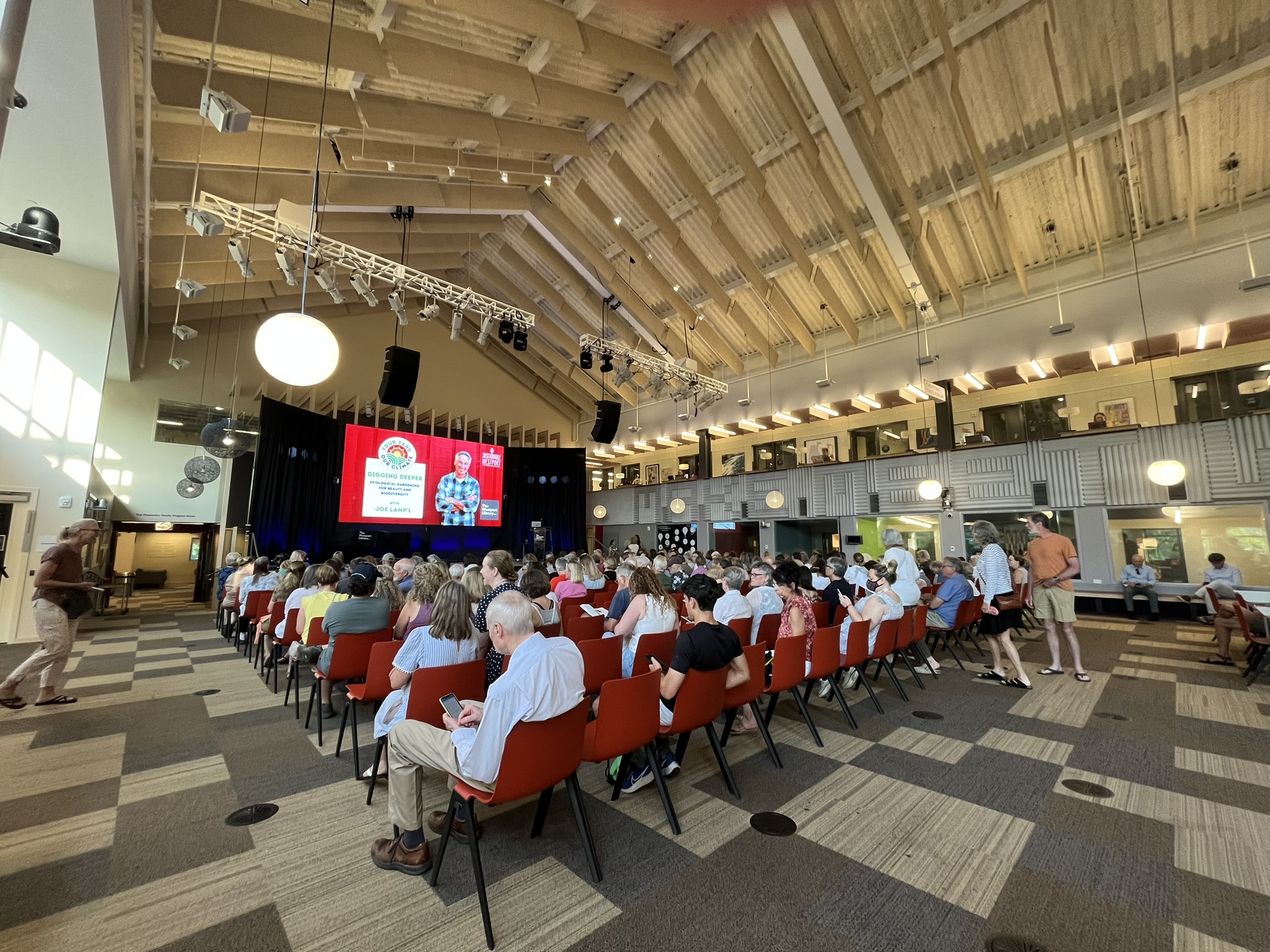
That was the central message of Sustainable Westport’s capstone speaker event for Your Yard, Our Climate, featuring nationally recognized gardening expert Joe Lamp’l. It was a wonderful gathering of people curious about how we can create beautiful, climate-positive and habitat-friendly landscapes. If you missed the event — or want to revisit Joe’s inspiring and informative talk — you can now scroll down to watch the full recording.
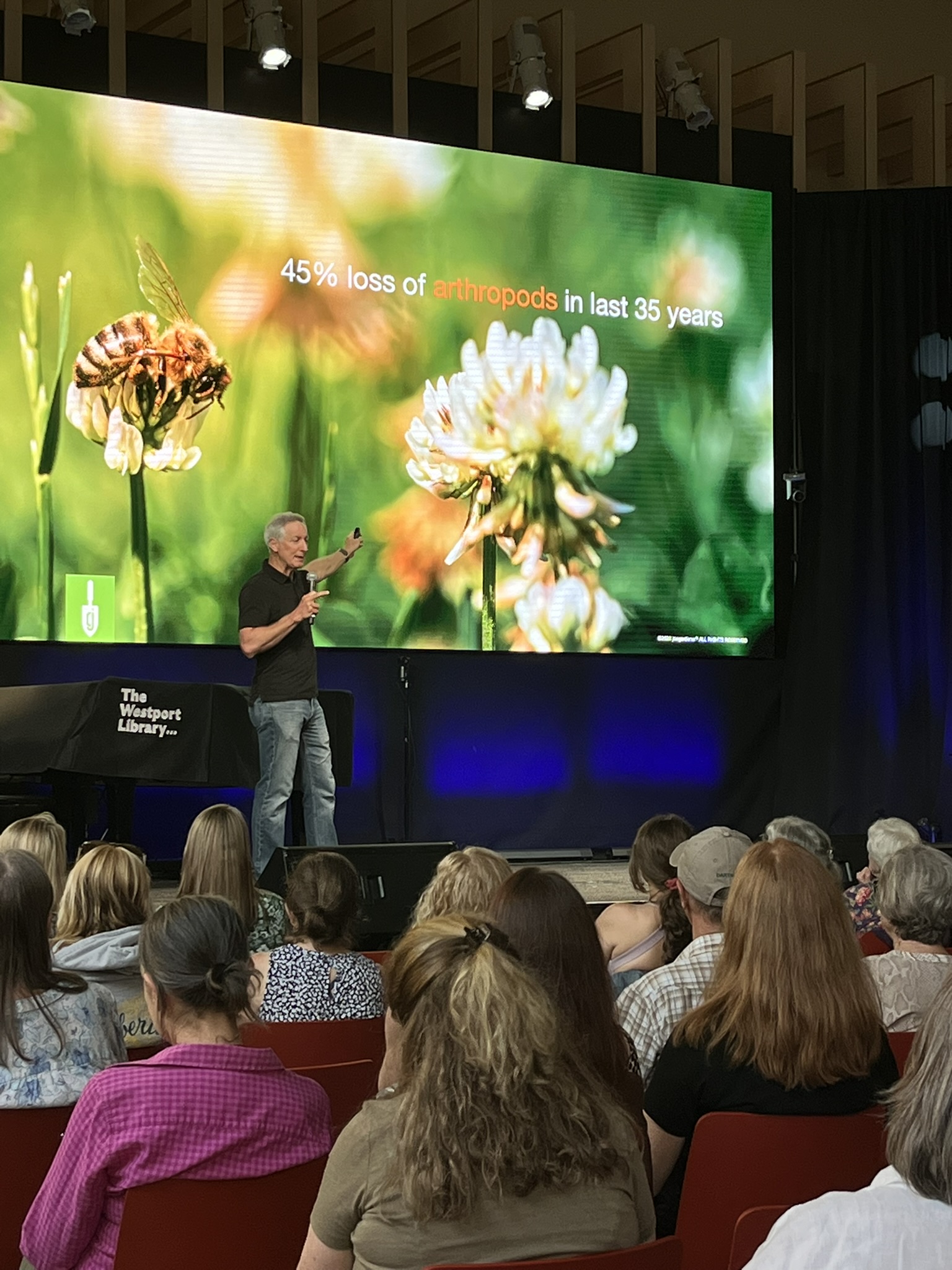
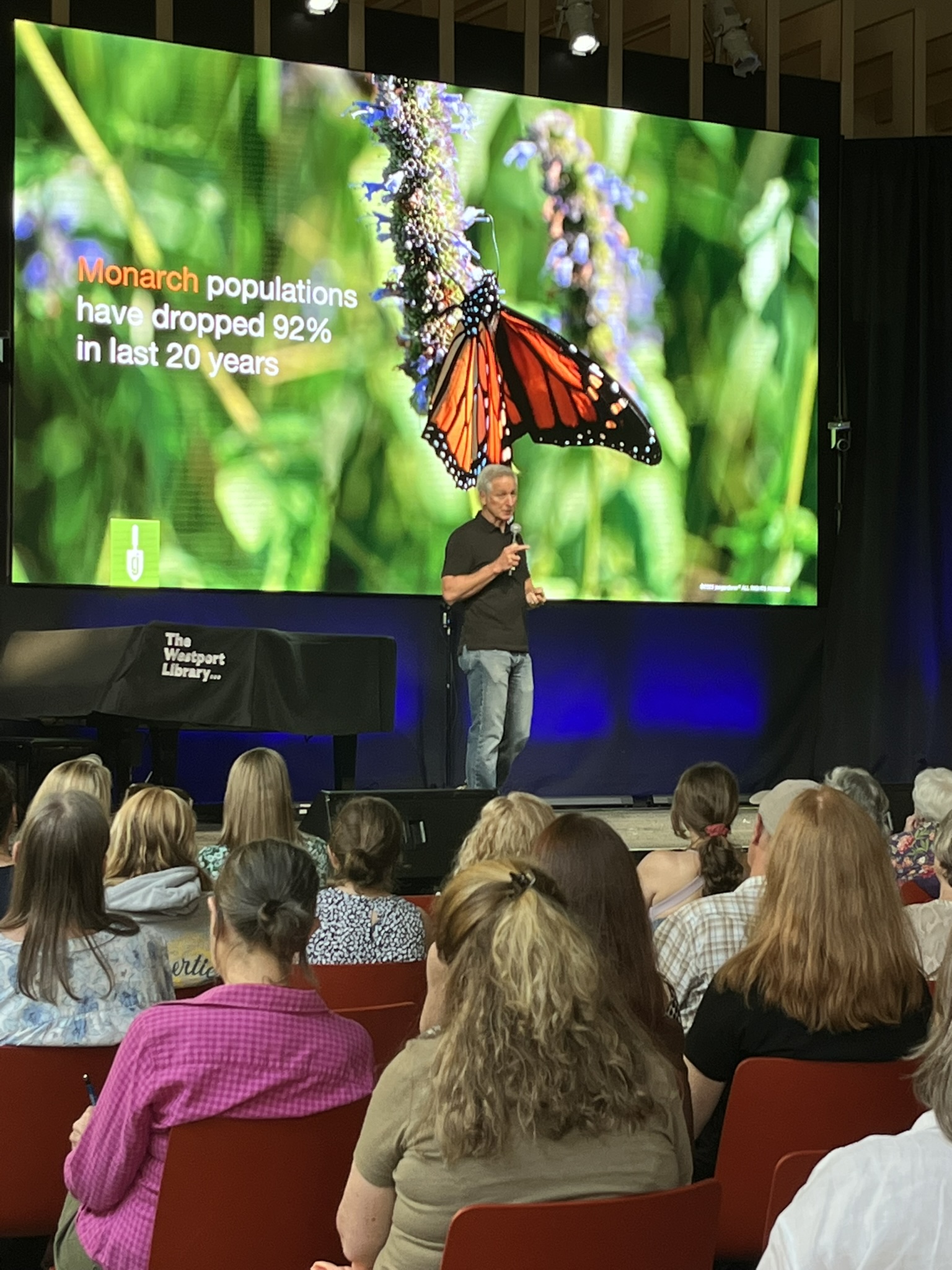
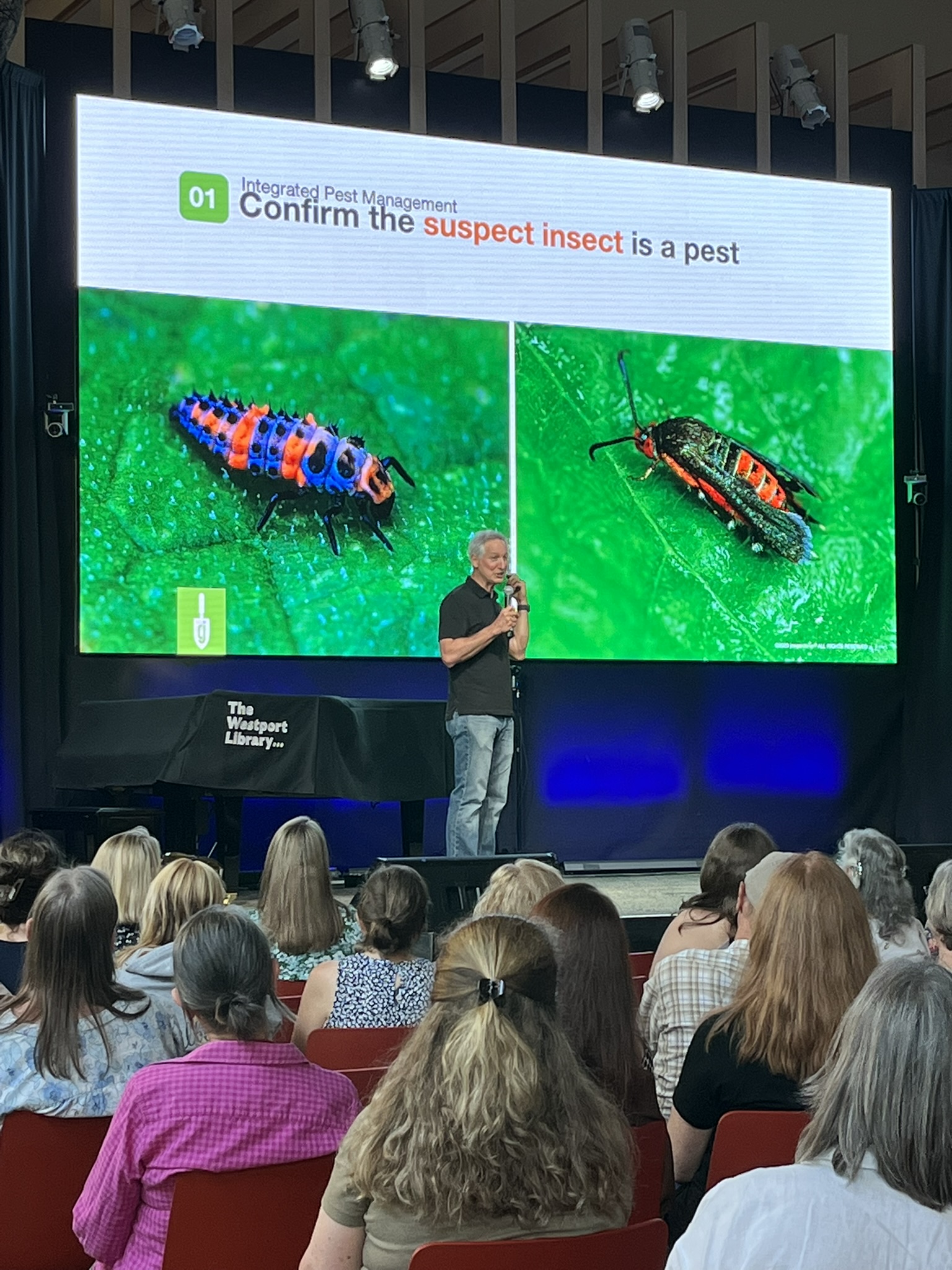
Joe guided the audience through the evolution of gardening, from the traditional “make it look pretty” mindset, to the adoption of integrated pest management (IPM) and the rise of organic gardening, and now to ecological gardening, which prioritizes biodiversity, soil health, and sustainability. In other words, we’re moving from gardening for ourselves to gardening for the planet.
In his talk, Joe shared 10 actionable ecological gardening practices for making your yard more ecologically friendly. Some practices are simple, like increasing the use of living or natural mulch because it does so many positive things, including reducing soil compaction, reducing soil-born diseases, suppressing weed germination and retaining moisture. Others are more strategic, like reducing lawn size in favor of native plants that support local pollinators and birds. Each practice or tip is designed to help you work with nature, not against it.
Whether you’re just beginning to think differently about your yard or already on a sustainable gardening journey, Joe’s talk is full of practical ideas and motivation to take your next step. The time is now to make a change (3 billion birds have vanished from North America in the last 50 years!!).
“We are now at a critical point of losing so many species from local ecosystems that their ability to produce the oxygen, clean water, flood control, pollination, pest control, carbon storage, etc, that is, the ecosystem services that sustain us, will become seriously compromised.” Doug Tallamy, as quoted by Joe Lamp’l
Watch the video, pick a tip or two, and start transforming your yard into a force for good:
More about Joe Lamp’l:
Joe Lamp’l is the creator and host of The joe gardener® Show podcast and founder of joegardener.com and the joegardener® Online Gardening Academy™. He’s also the creator, host, and executive producer of the Emmy-winning national public television series Growing a Greener World®, now available on YouTube.
A longtime advocate for organic gardening and ecological stewardship, Joe has shared his expertise as the host of Fresh from the Garden on DIY Network and as an on-air contributor for The Today Show, Good Morning America, and The Weather Channel. His work has earned numerous accolades, including the American Horticultural Society’s B.Y. Morrison Communication Award for outstanding and inspirational garden education across multiple platforms.

Joe’s latest book, The Vegetable Gardening Book, offers a practical, comprehensive guide to growing food successfully—whether you’re a beginner or a seasoned gardener. Through his podcasts, courses, and extensive online resources, Joe continues to educate and inspire a new generation of gardeners.
Thank you to the coalition who helped bring the full “Your Yard, Our Climate” initiative to life.

And a big thank you to our sponsor, Black Rock Garden Structures, who helped make this event possible!

Turf Talk: The Environmental Cost of Artificial Fields
As towns across the country, and Fairfield County, explore upgrades to athletic facilities, artificial turf often appears to be a modern, attractive option — low-maintenance, cost-effective, weather resistant, and durable. However, installing synthetic playing fields can have hidden long-term environmental, health, and financial costs that impact the entire community.
Environmental Impact: Artificial Turf vs. Natural Grass
Natural grass fields and green spaces function as vital ecological components, providing habitat, supporting biodiversity, and facilitating critical soil and water processes. In contrast, synthetic turf systems create a poorly permeable and biologically inert surface that eliminates habitat and disrupts local ecosystems. Unlike natural plantings that support pollinators, birds, and beneficial insects, artificial turf contributes to biodiversity loss. Artificial turf impedes natural infiltration, increasing surface runoff and reducing groundwater recharge, both key processes that support watershed health and climate resilience. This is particularly concerning in areas near wetlands, flood zones, or drinking water sources.
What Is Artificial Turf Made Of?
Artificial turf is composed of several synthetic components designed to mimic the appearance and feel of natural grass. The primary component is the plastic grass fibers, typically made from polyethylene, polypropylene, or nylon, which are all petroleum-based polymers. These fibers are attached to a backing layer, often made of polyurethane or latex, which provides structure and durability. To keep the synthetic grass fibers upright and provide cushioning, an infill material is added between the blades.
Traditional infill often consists of crumb rubber (banned in Westport in 2018) made from recycled tires, or silica sand. However, in response to environmental and health concerns, alternate organic infill alternatives have been developed, such as cork, coconut husk (coir), olive pits, and thermally treated wood fibers. These natural materials offer improved cooling properties, reduced chemical exposure, and enhanced biodegradability, though they may require more frequent maintenance and have a shorter lifespan compared to synthetic infills. Some systems also include shock pads beneath the turf for additional impact absorption.
Health and Pollution Concerns
Artificial turf carries significant environmental (and health risks) as the plastic materials degrade over time, releasing hazardous chemicals into nearby soils and waterways. Concerns include potential contamination from per- and polyfluoroalkyl substances (PFAS), heavy metals including lead and zinc, and volatile organic compounds (VOCs) — all of which can threaten human health and aquatic ecosystems. As the turf breaks down, it sheds microplastics, which are easily transported by wind and water, infiltrating storm drains and accumulating in soil. A study in Spain found that artificial grass fibers made up 15% of plastic debris larger than 5 mm within one kilometer of the shoreline.
Turf and the Urban Heat Island Effect
Synthetic turf contributes to the urban heat island effect. Unlike natural vegetation, which cools the air, artificial turf retains solar heat. Surface temperatures can exceed 120–160°F on sunny days, significantly increasing the risk of heat-related illnesses for users. A report by the New York State Department of Environmental Conservation found that surface temperatures on an artificial turf field were 35°F to 42°F higher than those on natural grass. VOC emissions are especially problematic in high temperatures, further impacting air quality and posing respiratory risks, particularly for young children and athletes who spend extended periods on these heated surfaces. Additionally, numerous studies have found that athletes playing on artificial turf may face a higher risk of certain injuries such as abrasions, ‘turf burns,’ and some non-contact musculoskeletal injuries.
The Financial Reality: Hidden Costs and Waste
While the initial cost requirements of artificial turf may seem minimal, lifecycle cost analyses often reveal a different financial picture. In addition to installation costs (with modified drainage systems often required), there are also maintenance costs to consider — fluffing, redistributing, replacing and shock testing infill; periodic disinfection of the materials; seam repairs and infill replacement; and watering to lower temperatures on hot days. The material lifecycle of artificial turf is also a major concern with an average lifespan of 8–10 years. The disposal of worn-out turf then presents an additional cost and a significant environmental burden. Most synthetic fields are non-biodegradable and difficult to recycle, often ending up in landfills where they contribute to the mounting crisis of plastic pollution.
A Better Alternative: Organically Managed Natural Grass Fields
Alternatively, organically managed natural grass fields offer a truly sustainable solution that provides long-term ecological, recreational, and economic benefits. Unlike synthetic turf, healthy natural grass sequesters carbon, enhances flood resilience by improving soil infiltration and water retention, and can offer habitat for birds and insects — key components of a thriving local ecosystem. These living landscapes also contribute to urban cooling through evapotranspiration and reduce stormwater runoff, improving water quality and ecosystem health.
Proven Cost Savings and Community Benefits
Implementing an organic management program requires a site-specific plan focused on optimizing soil health through practices such as aeration, compost applications, and the use of natural fertilizers. Though the transition may involve upfront investments in soil testing and labor, over time, organically managed fields develop deeper root systems than those managed conventionally, making them more resilient to drought, disease, and heavy foot traffic. Studies have shown that water usage can decrease significantly, and fewer synthetic inputs are needed, leading to lower chemical exposure for users and the surrounding environment.
Financially, organic field management is proving to be cost-competitive. A study conducted in New York by Grassroots Environmental Education found that once established, organic turf management programs can cost up to 25% less than conventional programs due to reductions in synthetic fertilizers, pesticides, and irrigation needs. As more municipalities adopt these practices, the long-term cost savings and environmental advantages make organically managed natural grass a compelling alternative to synthetic turf.
Conclusion: It’s Time to Rethink Turf
Artificial turf may promise convenience, but its environmental, health, and financial downsides make it a poor fit for communities seeking long-term sustainability. Natural grass fields, when organically managed and properly drained, offer a healthier, more climate resilient, and cost-effective alternative. As these decisions shape the future of our natural environment and community assets, including our schools, parks and waterways and shoreline, now is the time to get involved — speak up, stay informed, and help advocate for solutions that truly support the health of our community and the planet.
Westport Rotary Honors Sustainable Westport at Annual Day of Service Event – May 2025
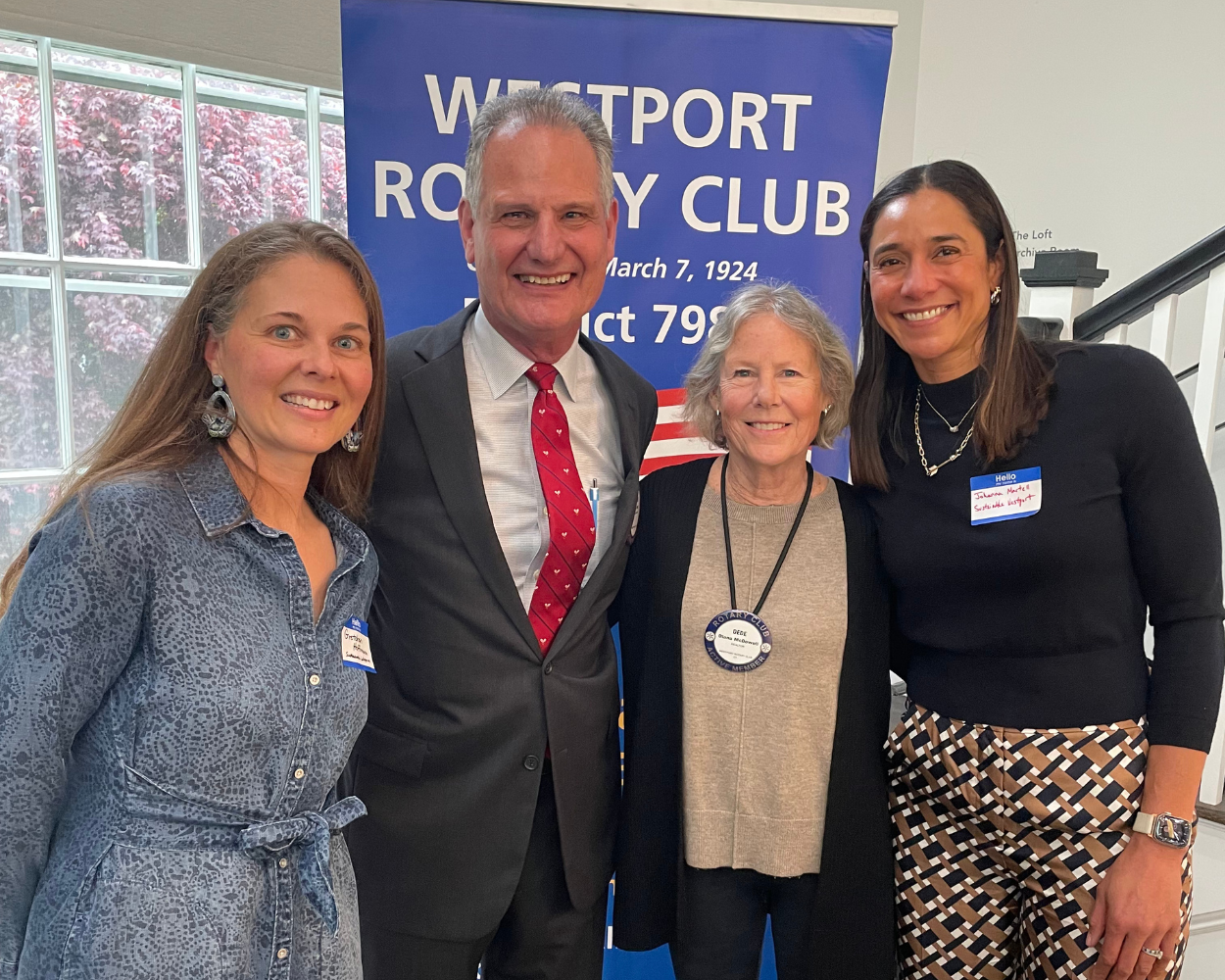
Sustainable Westport’s Co-Director Johanna Martell, Program Manager Gretchen Hoffmann, and Residential Energy Team Leader and Rotarian, Dede McDowell, pose with Westport Rotary Club’s Giving Committee Chair, Peter Helt.
Sustainable Westport was recognized alongside 45 other non-profit community organizations at the Westport Rotary Club’s annual Day of Service event. Sustainable Westport’s Co-Director Johanna Martell and Program Manager, Gretchen Hoffmann, were honored to attend the civic organization’s annual luncheon and to receive a $4,000 Community Partnership Organization Grant. The awarded funds will help launch Sustainable Westport’s next exciting Residential Energy initiative.

Thank you to the Rotary Club for your ongoing support of our mission: to inspire, connect, and support the residents, businesses, and government of Westport in making both small changes and big commitments to a healthier, more sustainable future.

Green Building Award: April 2025 Winners
The Town of Westport is pleased to announce Westport Green Building Awards to three recipients exemplifying sustainable design and construction.
Winners:
17 Maple Grove Avenue: Owner Scott Harrington
1 Hockanum Rd: Owner Thomas Hensel
Nomade Restaurant: Owners Ciara Webster & Patrick Jean, Solar Consultant John Roundtree
The Westport Green Building Award for Achievement in Sustainable Design and Construction recognizes residential and commercial projects that make, or have made, significant contributions to sustainability and Westport’s future as a Net Zero Community. This award is a collaboration between the Town of Westport and Sustainable Westport and it acknowledges noteworthy accomplishments that add benefit to the Westport community. These winners are a stellar example of what is possible with sustainable design and construction in residential and commercial projects.
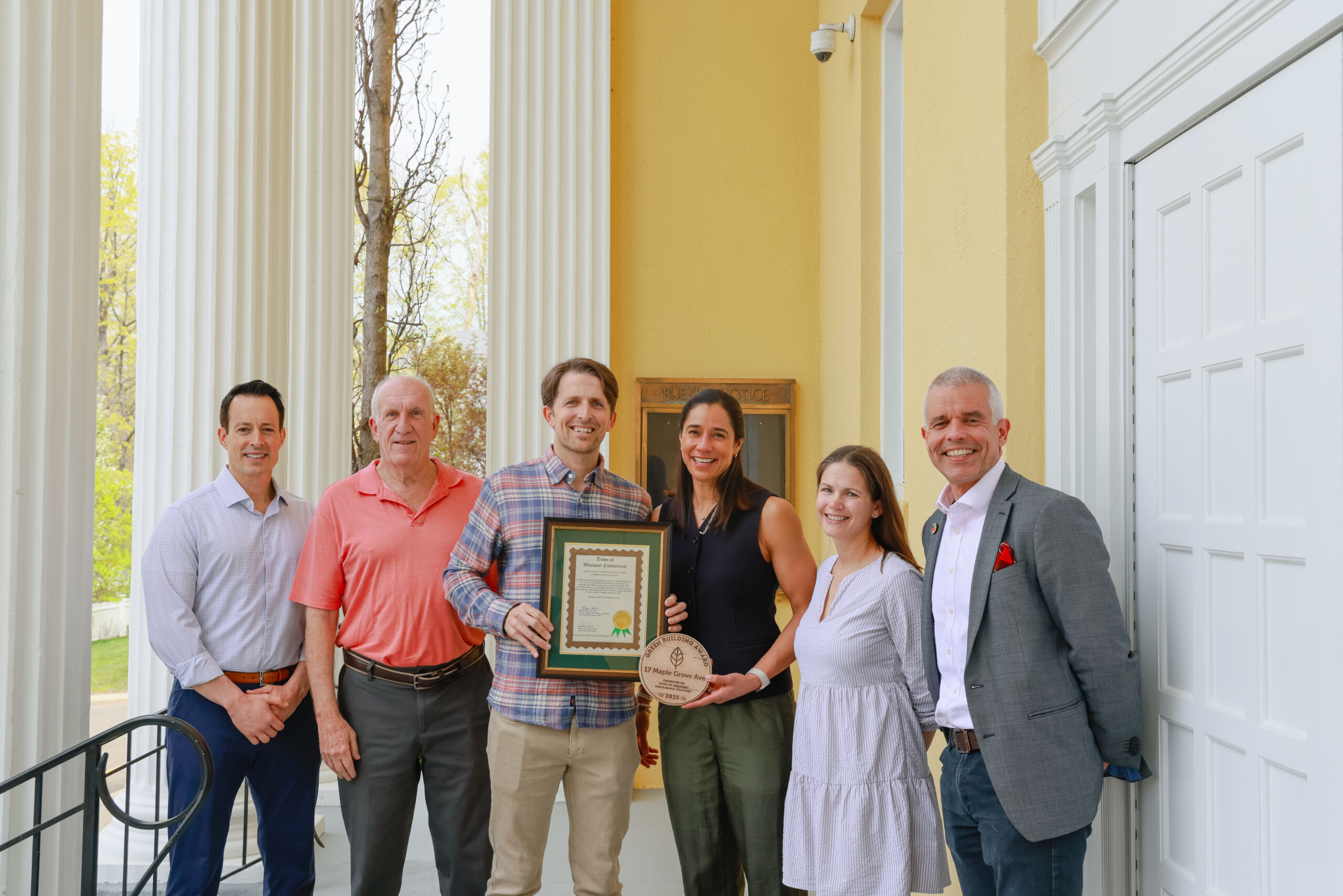
17 Maple Grove Avenue is new construction designed and built as net zero energy. All appliances, heating and cooling systems are electric and utilize the Photovoltaic (PV) roof for power. The insulation on the residence exceeds code, including a thermal resistance value (R-value) of 57 at the roof greatly reducing heating and cooling requirements. A smart home scheduler minimizes HVAC use by scheduling window shades to follow the path of the sun and limit heavy electronics usage to only off-peak hours. 17 Maple Grove Avenue is HERS rated with a HERS index score of 10. A HERS score rates a home’s relative performance, with a lower number indicating better performance. An average U.S. reference home has a score of 100.
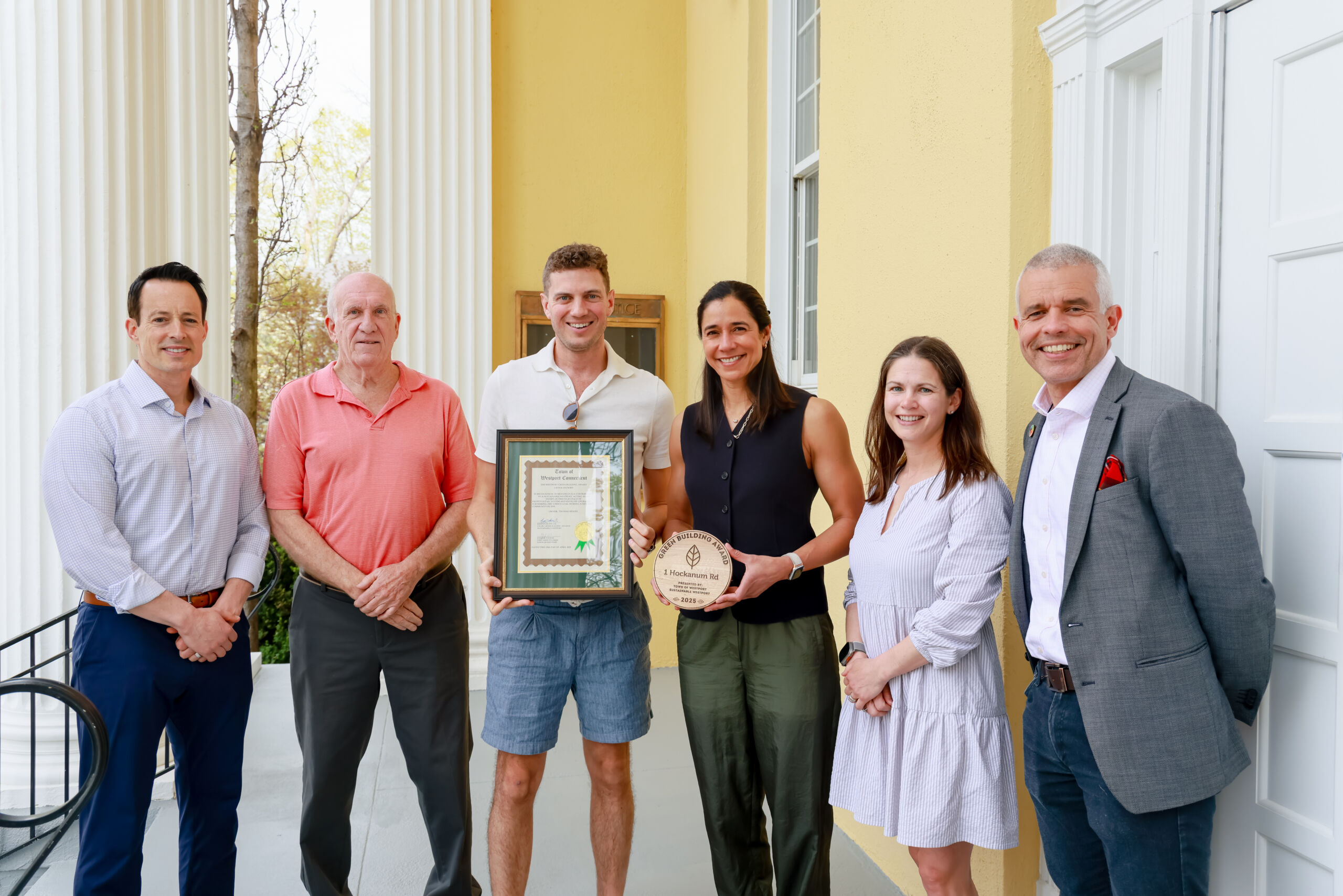
1 Hockanum Road is a home renovation that integrates a 70 Panel PV system (28.35 kW). This PV system offsets the residence’s power consumption on an annual basis. In addition, an energy audit was conducted to identify energy savings. As a result of the audit, 1 Hockanum added attic insulation, weatherstripping, and mechanical and lighting upgrades. Insulation and weatherstripping reduce the amount of heat gain/loss due to the outdoor temperature and infiltration. The HVAC system is also upgraded to include smart thermostats to add temperature setback scheduling and duct sealing to ensure processed air is efficiently distributed to the occupied spaces. Duct sealing alone is calculated to save 2,156 kWh per year. Insulation is also installed on the hot water piping to reduce energy losses. Retrofit LED lighting fixtures are installed to reduce power consumption on lighting while still providing the same light levels.
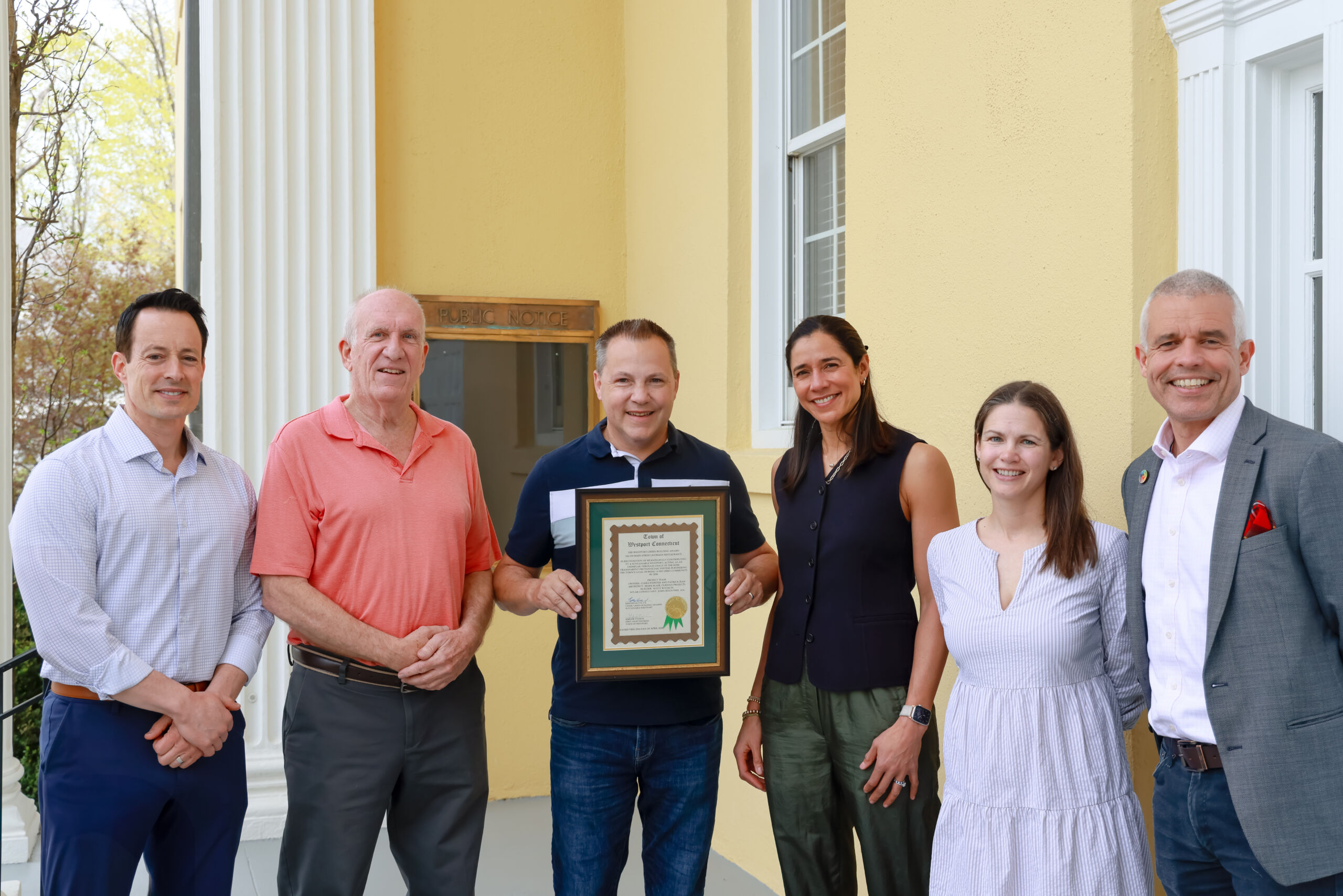
Nomade Restaurant (142-150 Main Street) is located at the site of the former Tavern on Main, originally built in 1810. This project contributes towards the town goal of net zero by 2050 by the renovation and reuse of the existing historic structure and uses renewable energy to reduce dependency on fossil fuels. The roof over the dining terrace features an innovative 10.2 kW, semi-transparent, roof integrated photovoltaic system. In addition to generating clean, renewable electricity, it also brings in natural light, reducing the restaurant’s dependence on electricity for lighting. The visibility of the solar panels is intended to be a conversation starter. It is intended to stimulate the interest of other local business owners and patrons to go solar.
Learn more about Sustainable Westport’s Green Building Awards Program and what you can do to make your home more sustainable.
Interested in applying for the award? The Town of Westport and Sustainable Westport invites Westport residents to submit an application or a nomination for projects that meet the criteria for a Westport Green Building Award as found on our Green Building Awards Program page. You can also email Chris Vornkahl at cvornkahl@westportct.gov, or call him at 203-341-5025 with questions regarding the application process. All Westport properties are eligible to receive the Award. Applicants will be considered on a rolling basis and awarded throughout the year.
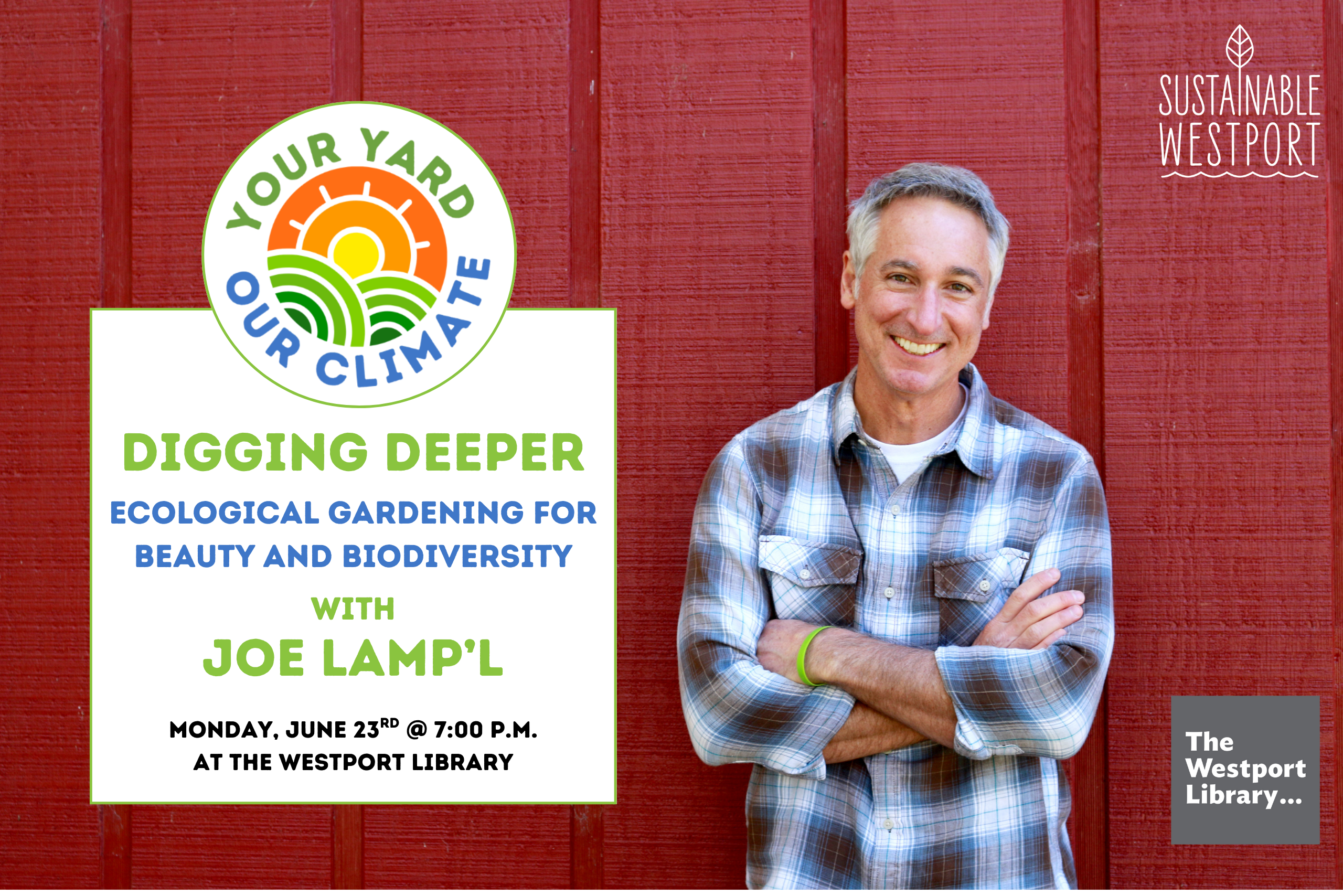
Digging Deeper – Ecological Gardening for Beauty and Biodiversity with Joe Lamp’l: 6/23/25
Sustainable Westport is thrilled to partner with The Westport Library to welcome Joe Lamp’l (a.k.a. Joe Gardener), one of the most trusted and sought-after voices in the gardening world, to share his expertise with our community. In this special event, Joe will share how we can enhance the beauty of our yards while also improving their ecological health. He will provide a practical blueprint for ecological gardening success, covering topics such as promoting healthy soil, reducing lawn size and reliance on harmful chemicals, and understanding the importance of native vs. invasive plants. Don’t miss this incredible opportunity to gain valuable insights and actionable tips for a more sustainable landscape!
Get to Know Joe Lamp’l
Joe Lamp’l is the creator and host of The joe gardener® Show podcast and founder of joegardener.com and the joegardener® Online Gardening Academy™. He’s also the creator, host, and executive producer of the Emmy-winning national public television series Growing a Greener World®, now available on YouTube.

A longtime advocate for organic gardening and ecological stewardship, Joe has shared his expertise as the host of Fresh from the Garden on DIY Network and as an on-air contributor for The Today Show, Good Morning America, and The Weather Channel. His work has earned numerous accolades, including the American Horticultural Society’s B.Y. Morrison Communication Award for outstanding and inspirational garden education across multiple platforms.
Joe’s latest book, The Vegetable Gardening Book, offers a practical, comprehensive guide to growing food successfully—whether you’re a beginner or a seasoned gardener. Through his podcasts, courses, and extensive online resources, Joe continues to educate and inspire a new generation of gardeners.
Register now to join us for this can’t miss event!
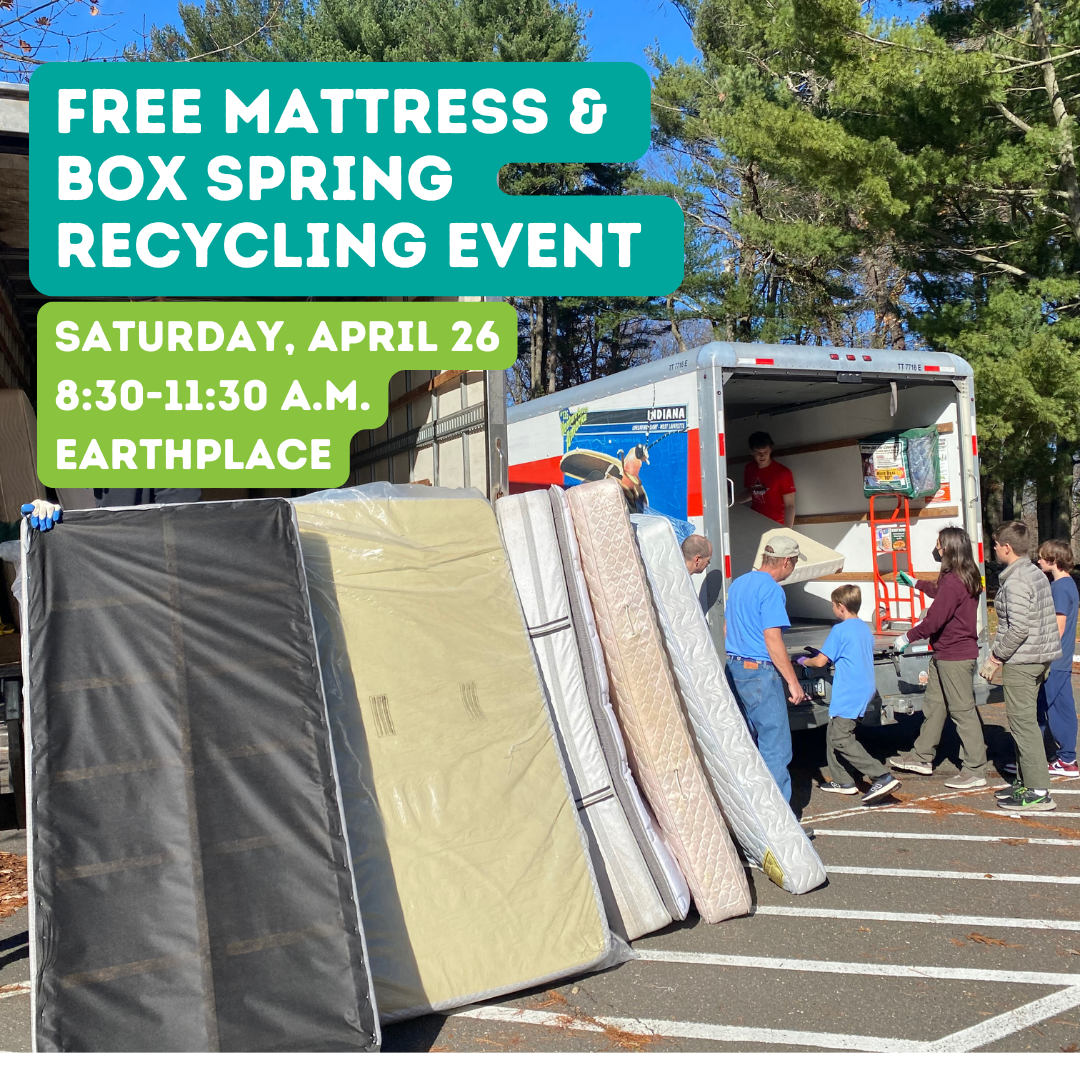
Free Mattress/Box Spring Recycling Event: 4/26/25
We are proud to co-sponsor the upcoming FREE Mattress/Box Spring Recycling Event alongside Earthplace.
Up to 90% of old mattresses can be recycled into new products like carpet pads, cushioning for exercise equipment and bike seats, insulation, air filters, and steel materials. Shockingly, Americans discard an estimated 20 million mattresses and box springs annually, with approximately 55,000 of them ending up in incinerators and landfills each day.
Bring your dry and unsoiled mattress and/or box spring to Earthplace during the designated time frame. We cannot accept mattresses or box springs that are damaged, wet, or contaminated (ex., bed bugs). If you are unable to transport your mattress or box spring, Westport’s Boy Scout Troop 36 will provide a pickup service for a small donation. Sign up here.
