NEWS
Why Connecticut Electricity Bills Are So High

Connecticut Electricity Prices Are Nearly Double the U.S. AverageConnecticut Electricity Prices Are Nearly Double the U.S. Average
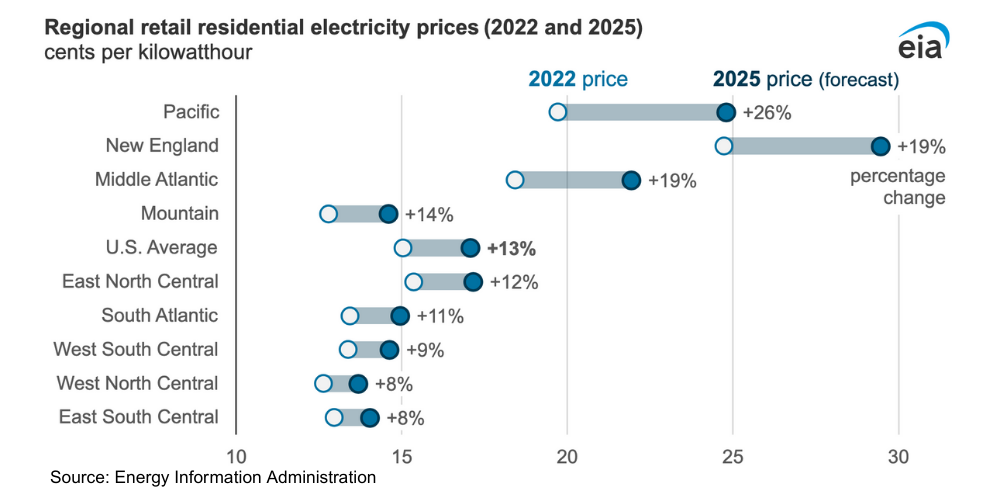
If your electricity bill has felt a little shocking lately, you’re not imagining things. Across the country, energy costs are rising faster than inflation — and here in Connecticut, we’re feeling it more than almost anywhere else. In fact, New England has the highest electricity prices of any U.S. region at around 30 cents per kilowatt-hour according to the Energy Information Administration (EIA). That means we’re paying nearly double what households in many other states do, and forecasts show rates climbing nearly 20% higher in 2025 compared to just a few years ago.
What’s Driving Higher Energy Costs?
Several factors combine to create a “perfect storm” for rising electricity costs:
- High Demand Outpacing Supply: Electricity use is climbing for the first time in a decade, driven by data centers, electric vehicles, and more homes relying on electric appliances and air conditioning.
- Aging Infrastructure: Connecticut’s power grid is old, and the cost of maintaining and upgrading equipment now consumes a larger share of bills than electricity generation itself.
- Climate Change and Extreme Heat: Rising temperatures increase air conditioning demand during heat waves. Scientific research shows that extreme heat events are becoming more frequent and intense in New England, directly contributing to higher electricity usage and peak demand. (NOAA Climate.gov)
- Over-Reliance on Natural Gas: Over half of Connecticut’s electricity comes from natural gas power plants. While cheaper than coal, gas prices fluctuate, and supply constraints during extreme weather can push costs higher. (ISO New England)
- Slow Deployment of Renewables and Transmission Upgrades: Clean energy like wind and solar helps lower costs but is intermittent. Delays in new transmission lines and backup systems increase reliance on conventional power, adding expense.
But why are Connecticut charges so high?*
You may have heard of the Public Benefits Charge (PBC). It’s a mandatory fee on Connecticut electric bills that funds programs like low-income assistance, renewable energy incentives, energy efficiency upgrades, and long-term power contracts – including payments to support Millstone nuclear plant – as well as costs for ISO-New England, which manages the regional grid.
The PBC is controversial because it makes up nearly 20% of many customers’ bills – far higher than in most states, where similar charges usually account for less than 5%. Critics say these programs should be funded through the state budget, not hidden in utility bills that disproportionately affect ratepayers. Supporters argue that the PBC guarantees stable, dedicated funding for critical programs that might otherwise face budget uncertainty. The debate continues over whether the charge should remain on bills or be restructured to balance transparency, affordability, and reliability.
Some Good News
]In August, Connecticut’s Public Utilities Regulatory Authority approved a $155 million relief package, funded through state borrowing, to help offset the high cost of electric bills.** The plan is expected to provide Eversource customers with an average savings of about $9 per month. A second round of borrowing is anticipated in 2026, with the associated savings expected to extend through 2027.
Transitioning to Clean Energy Sources
Natural gas currently powers about 58% of Connecticut’s electricity while nuclear powers about 38%, but transitioning to electric, renewable-powered systems is essential to reduce long-term costs, emissions, and vulnerability to climate-driven price spikes. The short-term reliance on gas highlights the need to expand solar, battery storage, and efficiency upgrades for greater energy resilience.
The combination of high demand, aging infrastructure, climate-driven heat, and gas price volatility suggests that electricity bills may continue to rise in Connecticut despite the aforementioned relief package.
Next Steps: Learn how Sustainable Westport and local programs can help you lower your energy bills and strengthen your home’s energy resilience in our recent article, How to Reduce Your Connecticut Energy Bills & Build Energy Resilience.
Footnotes:
* https://ctmirror.org/2025/05/19/ct-public-benefits-charge/
** The authorization to borrow money to provide relief to ratepayers came from Senate Bill 4, the omnibus energy savings legislation. An additional round of borrowing is expected next year.